
Expert Tips to Improve Your Listening Score - Duolingo English Test
In this post, I will teach you the most effective ways to raise your DET Listening score.
These tips are based on our experience helping 250,000+ of students around the world get ready for the DET, through our YouTube channel and our online practice platform that practice questions, mock tests, and instant scoring and detailed feedback on your responses.
Table of Contents
- Learn the Strategies for the 3 Listening Questions
- Master Strategies for Listening Questions Through Practice
- Measure Your Listening Score Improvement With Mini Mock Tests
- Focus on the Aspects of Listening That Are Most Difficult For You
- Expand Your Vocabulary
- Spend More Time Listening to English

Learn the Strategies for the 3 Listening Questions
The most effective thing you can to do raise your Listening score (or any subscore on the DET) is to learn the best strategies for the questions that count toward that score. By knowing how to best approach each listening question, you can make sure that you are using your English skills to get the maximum points.
There are three listening questions on the DET.
Listen and Type
With this question type, you have 1 minute to listen to a short statement (usually just 1 sentence) up to 3 times. You have to type exactly what you hear.
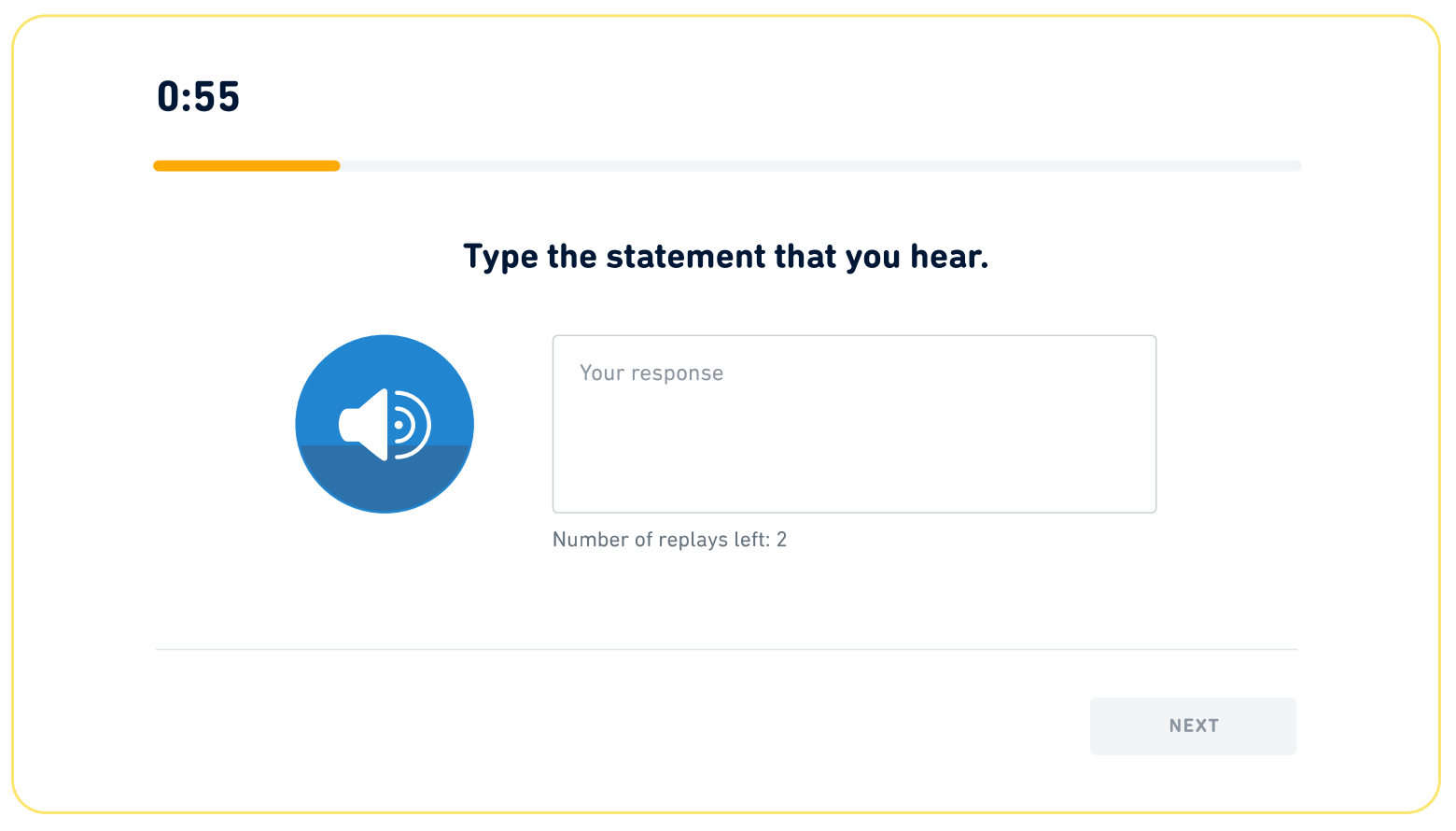
There are six to nine Listen and Type questions on the test.
Here are the most important tips for this question type. (You can read more about each tip below).
- Listen for contractions
- Listen for questions
- Use each listen strategically
#1: Listen for contractions
Contractions are when we combine two or more words into one word. For example:
- I am → I'm
- We have → We've
- Does not → Doesn't
Contractions are common when speaking – in fact, they exist because they make it easier to speak! This is why they appear quite often in Listen and Type questions.
If you hear a contraction, you must type it because in Listen and Type questions, you have to type exactly what you hear.
To hear some examples of contractions, check out our quick mini-lesson about this tip:
#2: Listen for questions
Duolingo also likes to include questions in Listen and Type statements. A reliable way to detect a questions is to listen for an upward inflection. In contract, declarative sentences have a flat intonation.
To understand upward v. flat intonations, you should watch this mini-lesson in which I explain and you can hear the difference between the two:
Another feature of questions is that the subject and verb are flipped. For example, let's say we have the declarative sentence: We are happy. We can turn this into a question by flipping the subject and verb and adding a question mark: Are we happy?
#3: Use each listen strategically
You need to effectively use each of your three listens on a Listen and Type question in order to increase your chances of getting full marks.
Here is how you should move through a Listen and Type question:
- When you come to a Listen and Type question, the audio will play automatically. Use this first listen to write down as much as you can.
- Clearly identify the part or parts of the statement that you didn't understand in the first listen.
- During the second listen, focus on those areas.
- Use your third listen to check your response and make sure that you got everything correct. Also be sure to check for any typos!
Even if you don't follow this strategy exactly every time, the key thing is that you are ready when you arrive to the question to start typing what you hear. Then on the second listen (and possibly the third) listen, you focus on specific parts of the statement you didn't fully understand.
You can find more information about Listen and Type here, and you can watch our full masterclass about it below:
Interactive Listening
The next Listening question you will see on the test is Interactive Listening. Interactive Listening is actually a set of questions that simulate a conversation with another person.
You will have 6 minutes and 30 seconds to answer the listening questions and then 75 seconds to answer the final question in which you write a summary of the conversation. There are two sets of Interactive Listening questions on the test.
Let's look at the different parts of Interactive Listening.
#1: The Scenario & Listen and Complete
Every Interactive Listening question set begins with the scenario. You have to listen to it, and then answer three to four Listen and Complete questions that test your comprehension of it.
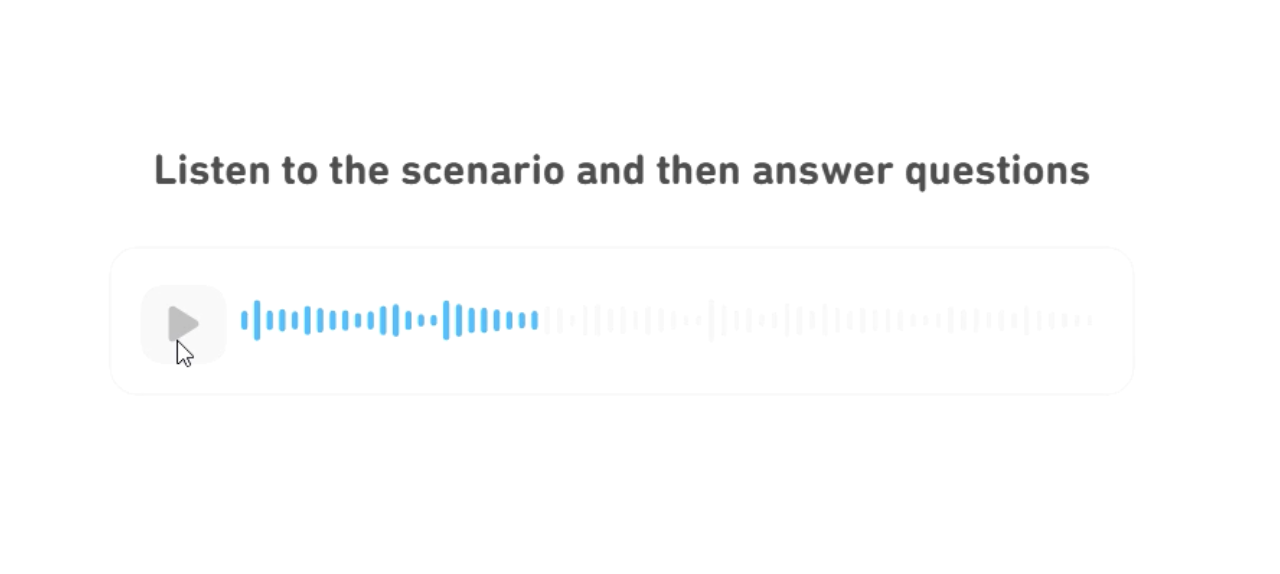
Unlike Listen and Type, you can listen to the scenario as many times as you like. You can also pause it in the middle to write down your answers.
In Listen and Complete questions, Duolingo likes to ask about:
- Who are you are talking to?
- Why are you talking to them?
- What academic subject is relevant to your discussion?
so be sure to pay attention to these aspects while listening to the scenario.
Below are tips for Listen and Complete:
- Listen to the scenario before answering each Listen and Complete question. This allows you to focus on finding the correct answer for each one.
- Focus on the ideas. Duolingo says, “Minor spelling, punctuation, and grammar errors do not matter as long as the errors that you make do not change the meaning.”
- You do not need to write down the answer exactly as you hear it. Duolingo says, “You can paraphrase the answer. Some questions might even require you to paraphrase.”
- There is a limit to how much you can write. Your answers will likely be less than 5 words but almost never more than 10.
- Don't spend more than 2.5 minutes on answering the Listen and Complete questions. You want to give yourself at least 4 minutes for the Listen and Respond questions.
#2: Listen and Respond
Next comes the ~5 Listen and Respond questions. You will listen to what the other person says and then you will pick the most appropriate response from the options provided, simulating a conversation with another person. You only get to listen to what the other person says once, and you can't pause it, but you can play the audio when you chose.
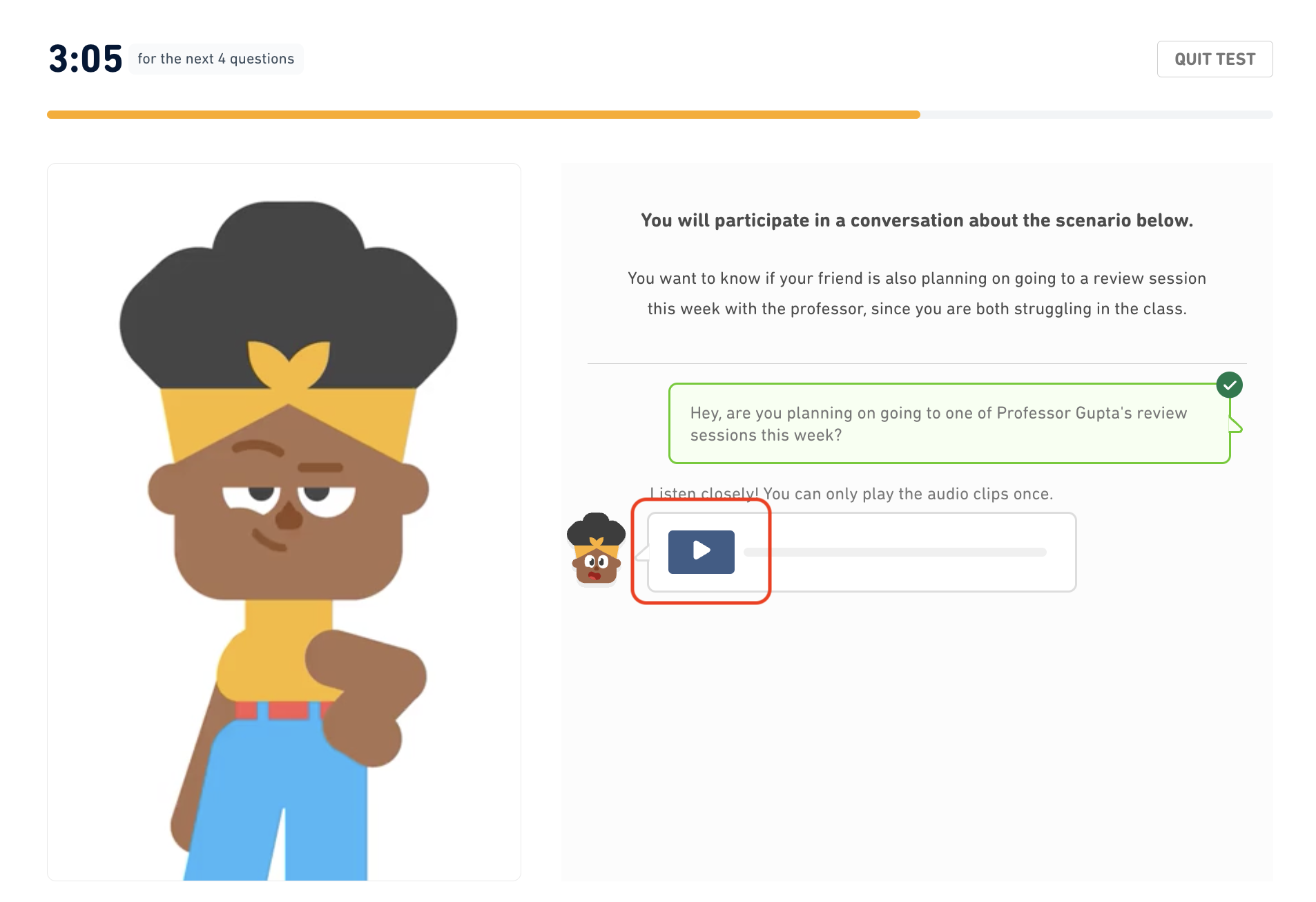
If you get a question incorrect, you will be shown the correct answer so that you can follow the conversation:
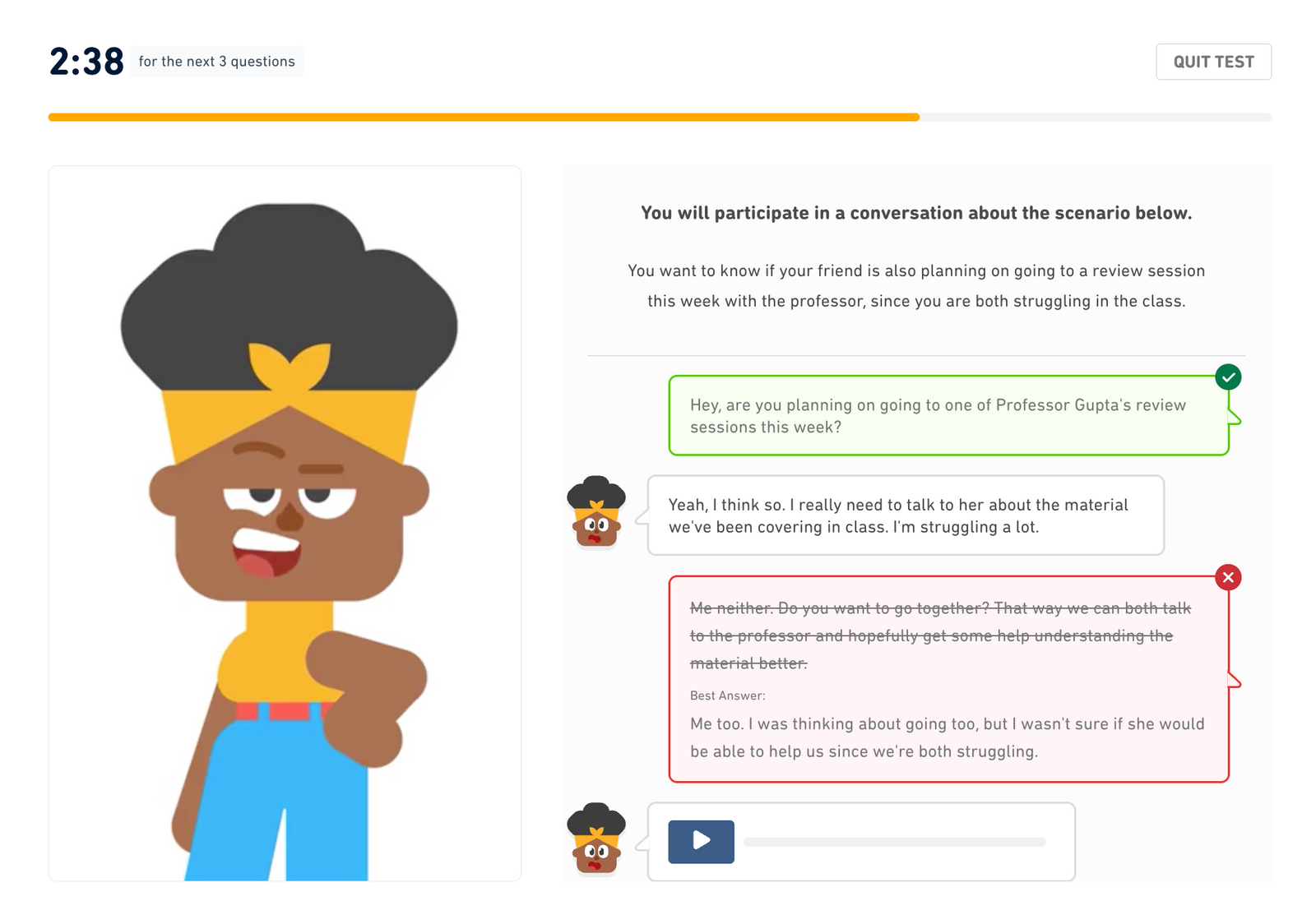
Here are the best tips for Listen and Respond:
- Review all of the options and use process of elimination. There are usually multiple options that seem correct. You need to review all of the options to eliminate the bad ones and identify the best answer, not simply the first one that seems correct.
- Quickly eliminate options by looking at the beginning. Often each option will include a quick response to what the other person says at the beginning. If that very first part doesn't make sense, then you can immediately eliminate that option, saving you time. (For examples of this, check out this part of our Interactive Listening masterclass.)
- Listen carefully. You can only listen to each audio clip one time!
- Read the correct answer. If you get a question wrong, be sure to read the correct answer so that you can still understand the conversation.
- Scroll up to re-listen to the scenario and previous steps of the conversation: You can scroll back in the conversation all the way to the beginning to review everything.
#3: Summarize the Conversation
After you complete all of the Listen and Respond questions, you will then need to click NEXT to move to the final question in the section, Summarize the Conversation:
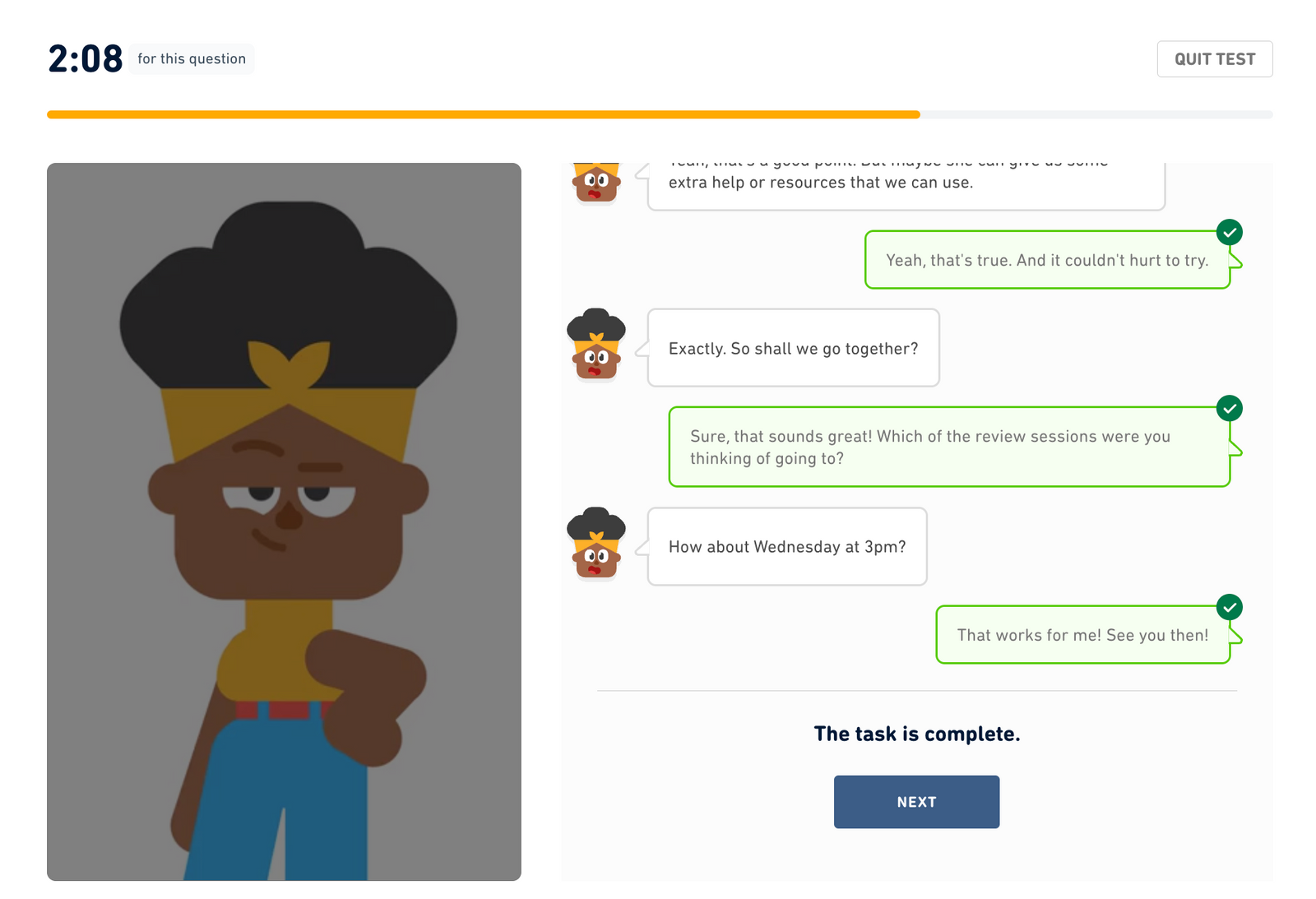
But before clicking next, you should scroll up and review the conversation and scenario to capture the key information that you will use in your summary. Here are the questions you want to answer before going to Summarize the Conversation:
- Who was in the conversation?
- Why did we talk?
- What did we talk about?
- What are 2 new pieces of information revealed during the conversation?
The Summarize the Conversation question is very simple:
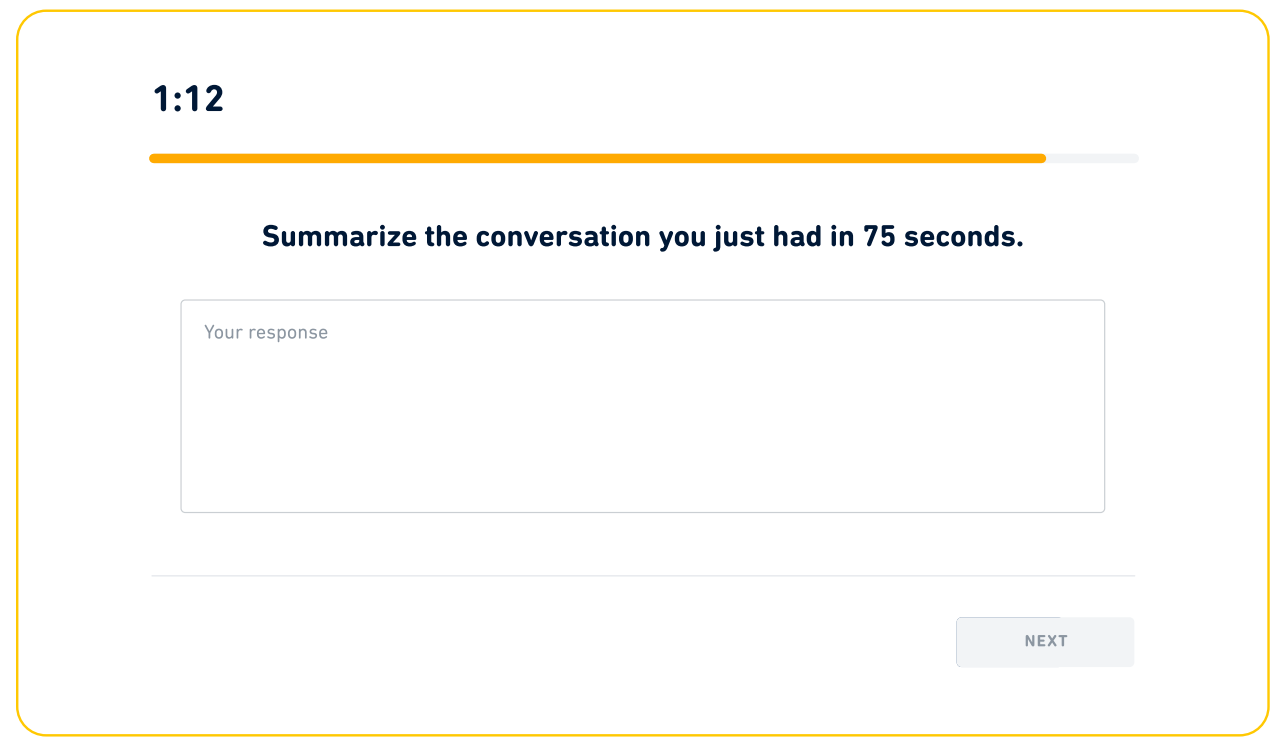
75 seconds is not a lot of time, so you should use a template to structure your response. Here is the template that we recommend:
- Sentence #1: In this conversation, I talked with _____ about ____.
- Sentence #2: Describe something that was revealed during the conversation
- Sentence #3: Describe a second thing that was revealed during the conversation
In Arno, for free, you can practice unlimited Interactive Listening questions. Just click here to create your account.
You can also learn some key vocabulary to help you with sentences #2 and #3.
Here are all of the tips for Summarize the Conversation:
- Save ~30 seconds to review the scenario and the conversation and mentally answer those key questions we looked at above.
- Use a template to structure your response.
- Learn advanced vocabulary that you can use in the template to gain even more points. (You can find 14 very useful advanced words in this PDF printout.)
- Use the past tense. The conversation is over, so you need to use the past tense in your summary.
- Save approximately 20 seconds to proofread your response. Look for obvious errors like typos and misspellings.
For more information about Interactive Listening, check out this article or watch our full masterclass below:
Interactive Speaking
The final question that counts toward your Listening score is Interactive Speaking. In this question type, you will be asked a series of six to eight questions and you will have 35 seconds to respond to each one. It counts toward your listening score because you have to listen to the questions posed to you; you can't read them.
Here are the key tips to help you while you are listening to the question:
#1: Listen carefully to the second part of the question
The person speaking will often start with phrases like Thanks for that information or Interesting, let me ask you another question. The important part of the question—what you need to talk about—comes in the second half. Listen for question words like describe, discuss, tell me about, do you think, in your opinion, why, how, who, what, and where.
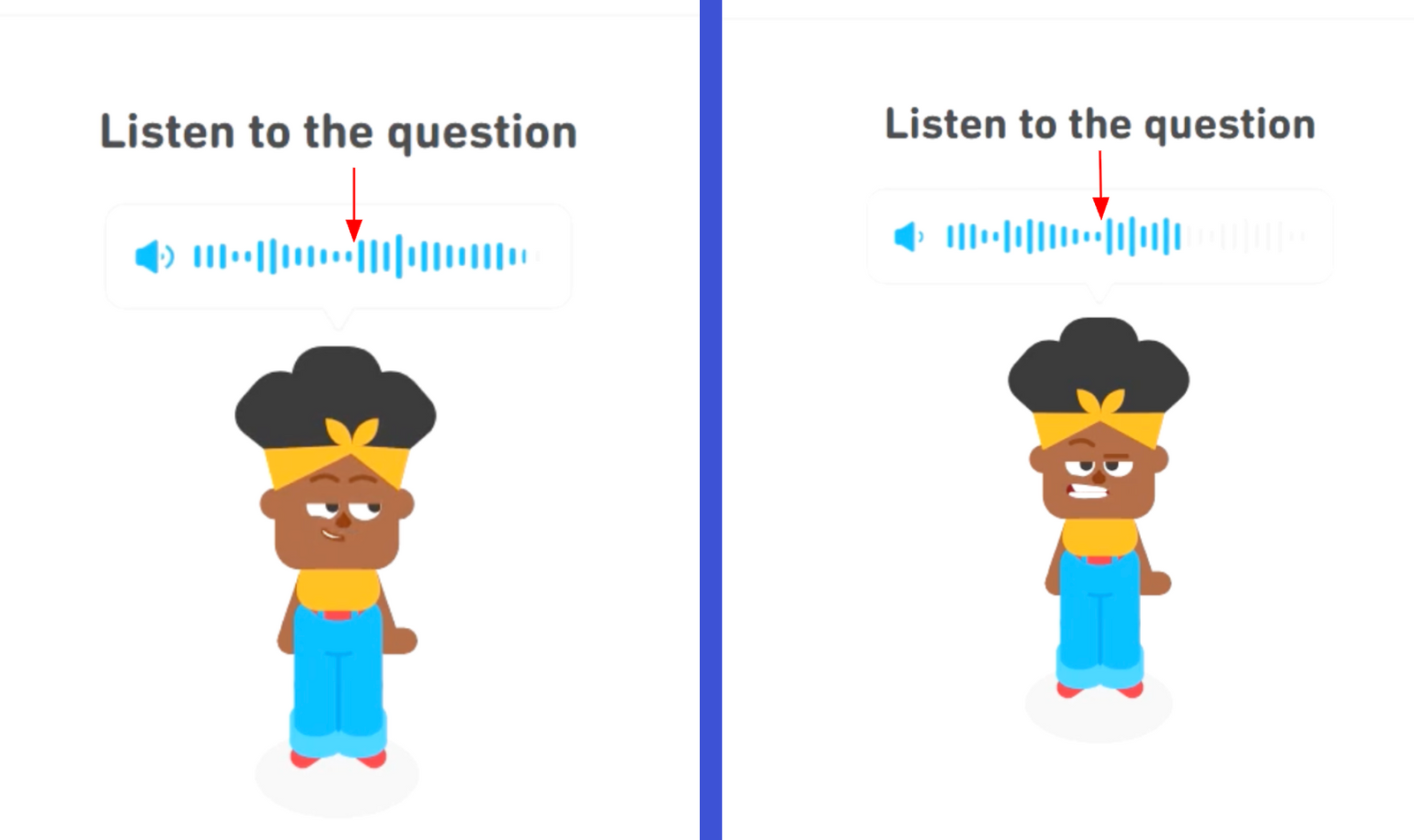
#2: Look for the "big spike" in the audio waveform
To help you identify the important part of the question, you can look at the visual representation of the question (called a waveform). The question you need to answer usually starts with a "big spike" in the sound around the middle of this picture. Looking at this can help you quickly find the important part of the question.
For more tips for Interactive Speaking, including tips for the speaking part of those questions, check out this article or watch our masterclass:
Master Strategies for Listening Questions Through Practice
It is not enough to simply read about the strategies we looked at above. To really master them, you have to practice with them. This is why we intentionally made Arno's free tier very generous 😁
For free in Arno, you get unlimited practice questions for every question type! Not only can you focus on specific questions, but you can also filter by the difficulty of questions so that you only practice questions at your target level. Our team of DET experts at Arno have also identified the 30 essential Interactive Listening questions that you should practice with in preparation for the test. You can access our practice questions at https://duolingo.goarno.io/questions.

Measure Your Listening Score Improvement With Mini Mock Tests
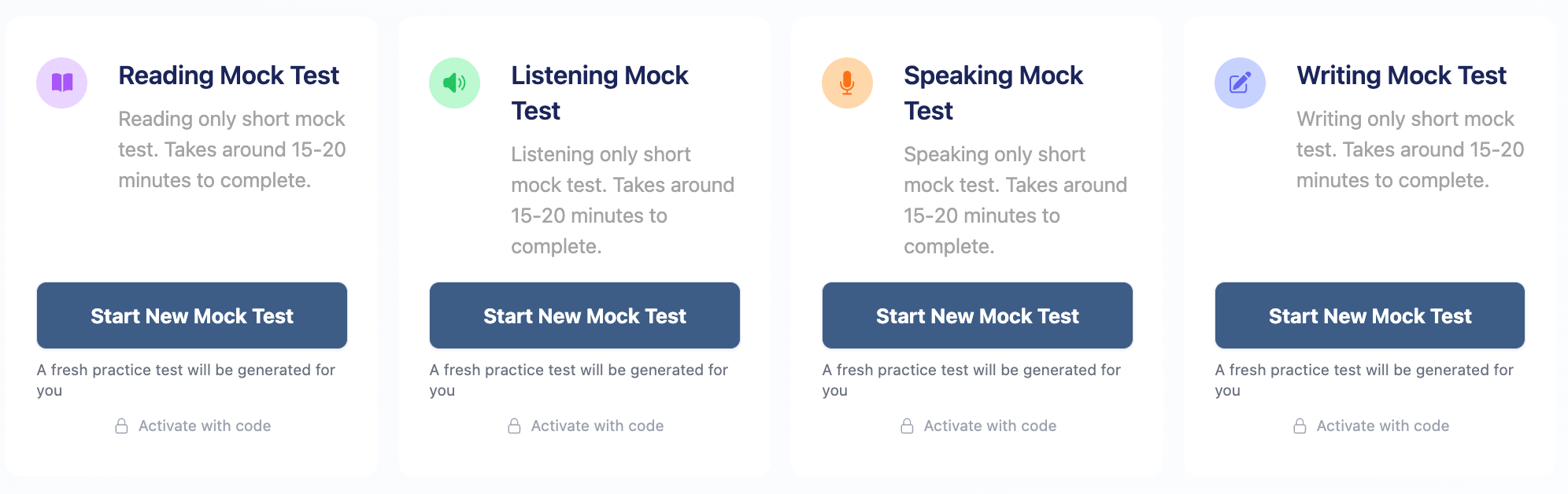
In Arno, you will also find mini mock tests for each subscore, including Listening. This allows you to track how much you are improving on the Listening section specifically as you prepare for the test, saving you time and making your studying far more efficient. You can access our mini mock test at: https://duolingo.goarno.io/mock-tests
Focus on the Aspects of Listening That Are Most Difficult For You
The more you can focus on your exact weaknesses, the faster you can improve. To improve at listening, you want to focus on the kinds of words and specific sounds that you struggle with. For example, do you struggle to identify if a noun is singular (for example: cup) or plural (cups)? Perhaps you have a hard time distinguishing between present tense verbs (talk) or past tense verbs (talked).
It's difficult to know which kinds of words and sounds you should focus on. That's why we built an AI-powered system to create personalized Listen and Type questions just for you. By analyzing your mistakes on Listen and Type questions, we are able to identify what you need to focus on and then we generate new questions so that you can work on those areas. These personalized Listen and Type questions will help you improve very quickly.
Because we have to use some powerful AI models to create them, we can't offer them for free, so they are only available on our paid plans. You can access them at: https://duolingo.goarno.io/personalized-questions.
Expand Your Vocabulary
The larger your vocabulary, the more you will be able to comprehend while listening. Expanding your vocabulary will help with every other area of your English abilities, so it's an excellent thing to work on.
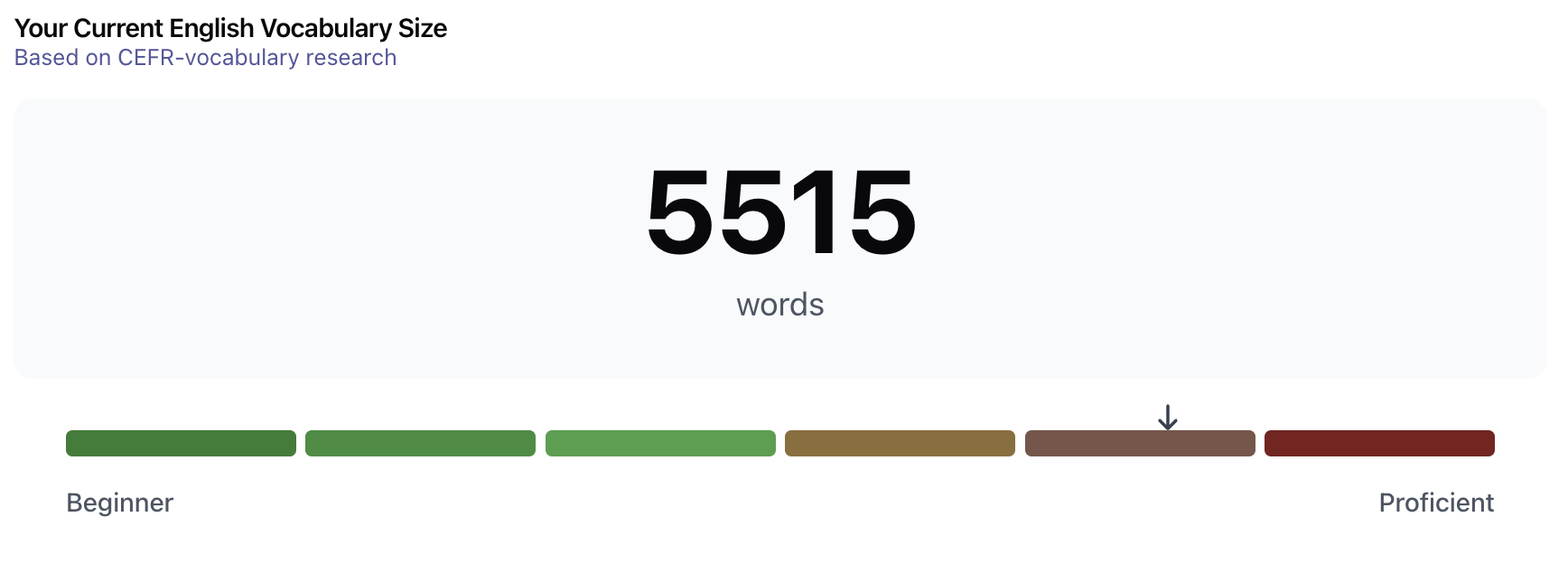
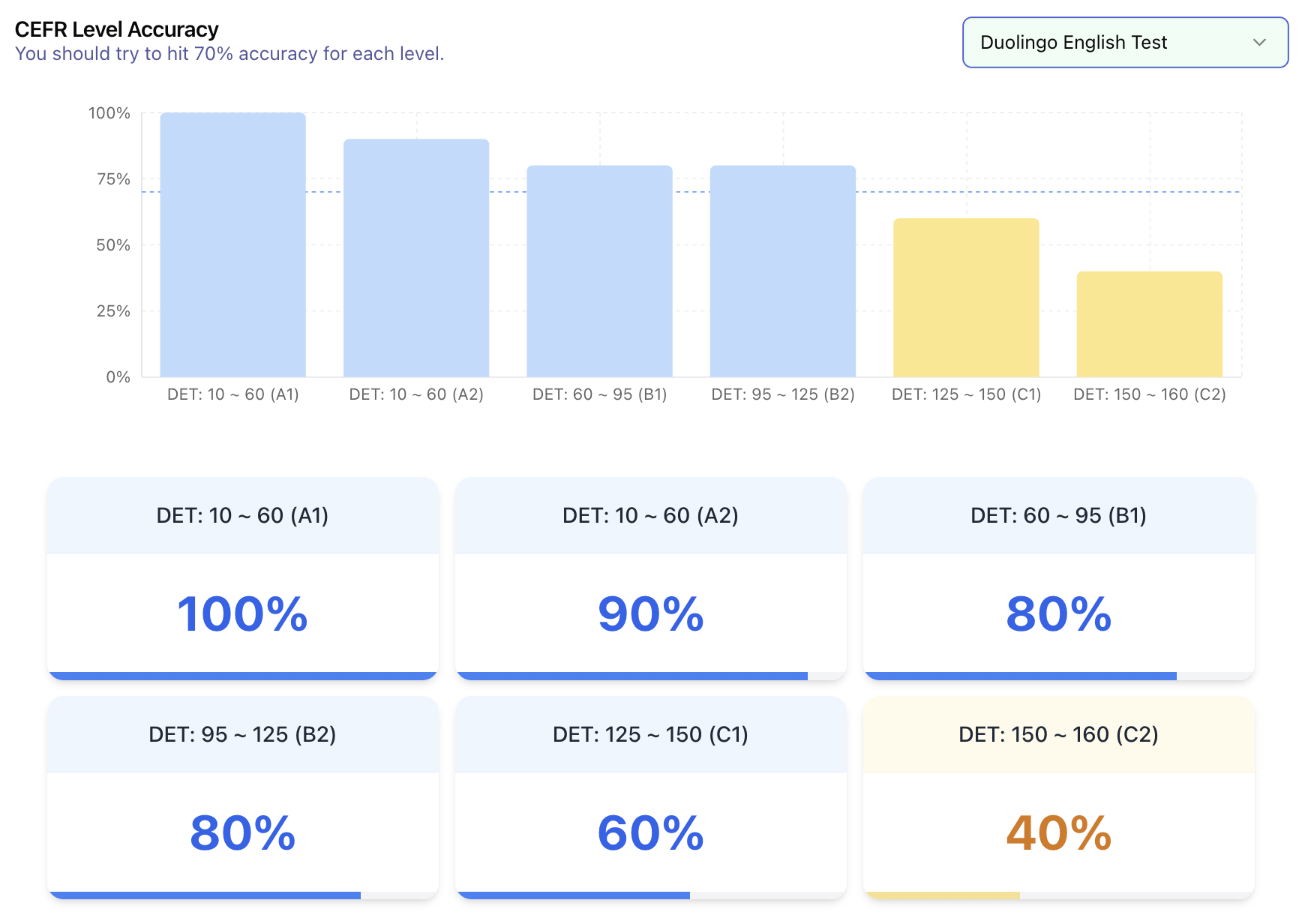
To start, you should take Arno's Vocabulary Assessment. This will identify the gaps in your vocabulary so that you know where to focus: https://vocab.goarno.io/assessments
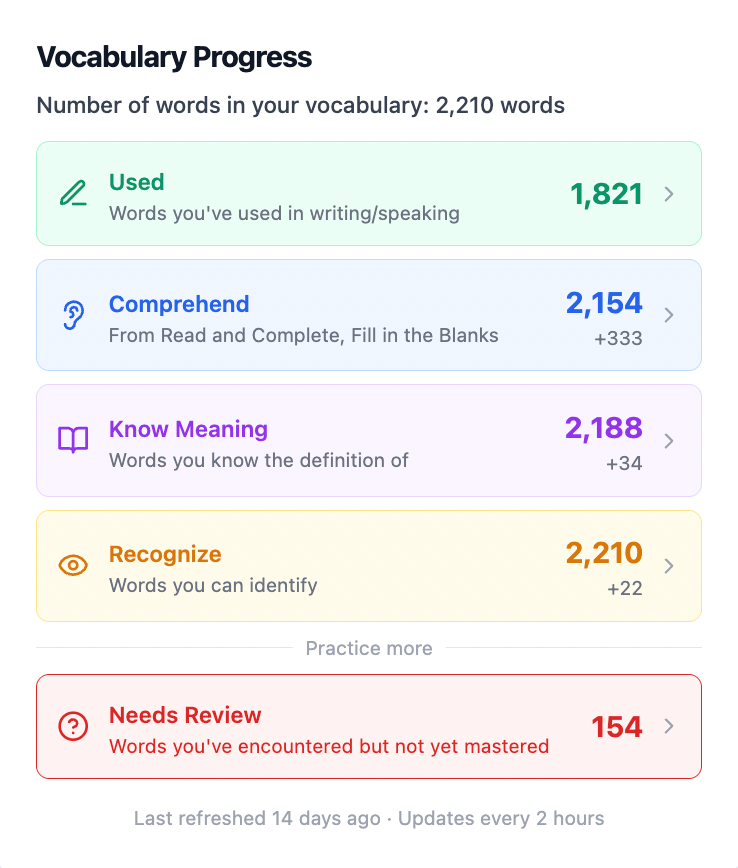
After that, you can use our Vocabulary Builder to focus on specific words that you should learn. We have collections for specific areas like DET comprehension questions, so if you want to raise your Listening score, that's a great place to start: https://vocab.goarno.io/collections/duolingo
To help you more quickly learn new words, Arno tracks which words you know and don't know as you go through DET practice questions. This makes it even easier to learn the words that you need to level up your English.
Spend More Time Listening to English
You can also improve your listening skills without studying. Really!
Just by watching English-language movies and TV shows, you will get better at listening. This is why learning a language can be so much fun! Other subjects require you to sit and study. But to learn a language, you can do fun things – even watch TV! – and you will improve.
Thanks to Hollywood, there is so much incredible content in English. You probably already have some favorite movies or shows that are in English.
You can also watch YouTube content, listen to podcasts, or listen to English music. As you listen, repeat back what they are saying to get some speaking practice as well. Write down words that you don't know and look up the definitions.
There are tons free resources on YouTube for English learners. The BBC alone produces a ton, including their very popular 6-Minute English Series:
Don't underestimate how much a little bit of additional English practice every day can help you. If you spend just 10 minutes a day listening to English and learning three new words, after a year you will have spent almost 61 hours practicing your listening (2.5 full days!) and learned 795 new words! 🤯